
Generative Engine Optimisation (GEO)
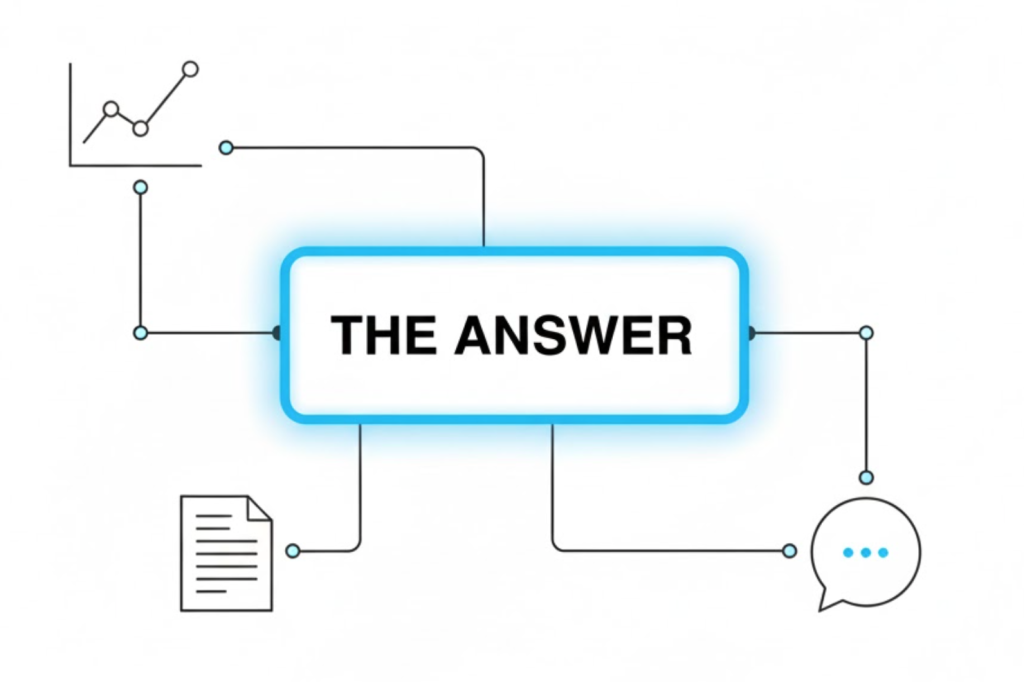
What is GEO (Generative Engine Optimisation)?
Marketing used to be simple: optimize for Google, get a list of blue links. But today, millions of users are asking sophisticated AI models for direct answers.
This shift has birthed a new discipline: GEO (Generative Engine Optimization).
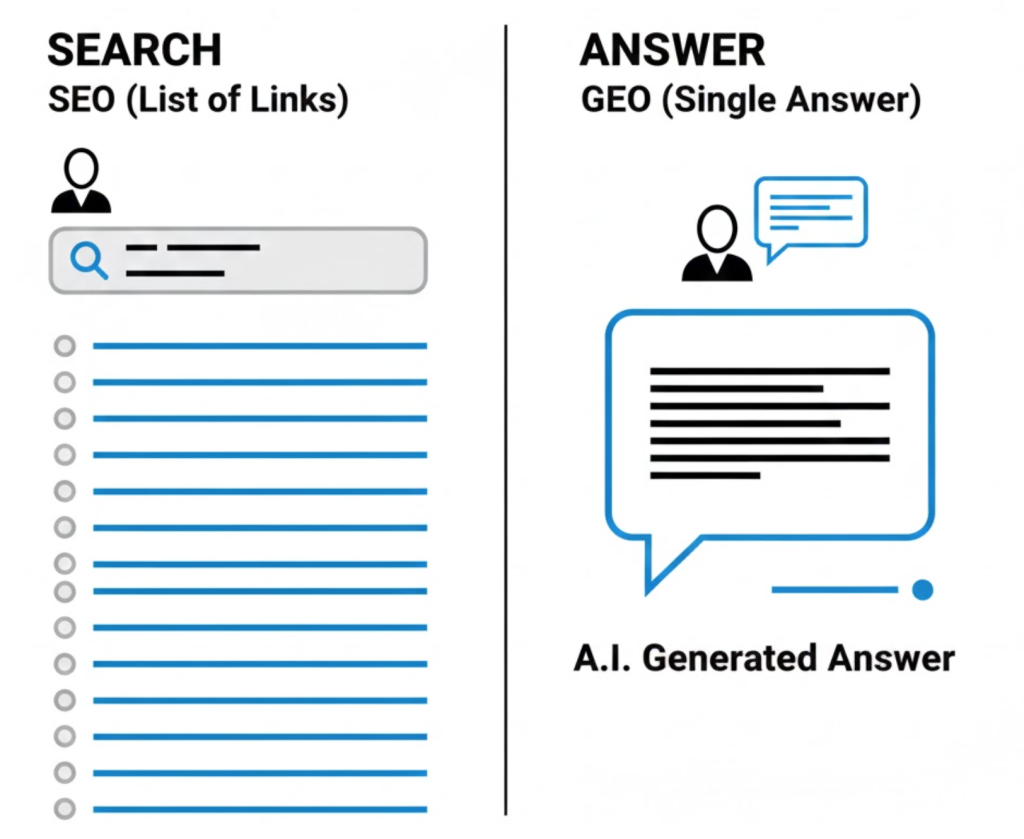
While SEO focuses on ranking your website in Google’s list, GEO is the art of optimizing content so AI engines (like ChatGPT, Claude, and Google’s AI Overviews) select your brand as the “answer.”
Future-proof your SEO strategy.
Traditional SEO is no longer enough. Learn exactly how to optimize your brand for AI search engines like ChatGPT and Gemini in our complete guide.
The Core Difference: “Search” vs. “Answer”
To understand GEO, you must understand the difference in user behavior.
- Traditional Search (Google): The Librarian. “Here are 10 books on that topic; go read them.”
- Generative Search (AI): The Consultant. “I read the books for you. The best option is HubSpot because X, Y, and Z.”
GEO is the process of convincing that “AI Consultant” that YOU are the best recommendation.
How Generative Engines “Choose” Winners
AI models prioritize three factors when formulating an answer:
1. Citation Authority
AI is terrified of lying. It heavily favors sources cited by other trusted sources. If your brand is mentioned in authoritative journals, the AI trusts you.
2. Semantic Context
This links back to Vector Search. The AI looks for the words surrounding your brand name. If you appear near “trusted” and “expert,” the AI learns that association.
3. “Information Gain”
AI ignores repetitive content. It rewards Information Gain—content that provides unique statistics or contrarian viewpoints.
Technical Insight: RAG (Retrieval-Augmented Generation)
How does ChatGPT know about breaking news? It uses RAG. This is the process where the AI pauses, “Googles” the query in real-time to find facts, and then writes the answer.
To win at GEO, your content must be structured to be easily “readable” by these RAG bots. This means using clear Schema Markup, concise tables, and direct answers that the bot can easily scrape and summarize.
The GEO Optimization Strategy
Target “Multi-Intent” Queries
Users ask AI for comparisons: “Compare X vs Y.” Create comparison pages that evaluate competitors honestly. Provide the data (pricing, pros/cons) directly.
Quote Sources & Statistics
Research suggests that content containing citations and statistics performs better in GEO. Instead of saying “We are fast,” say “We reduced load times by 40% (Source: 2024 Audit).”
Optimize for E-E-A-T
AI models are biased toward “Expert” voices. Ensure your author bios are detailed. The AI checks who is saying it, not just what is being said.
The Takeaway
Generative Engine Optimization is the frontier of digital marketing. It forces businesses to stop “gaming the system” and start providing high-value intelligence.
At Saint Digital, our SEO services pioneer GEO strategies for businesses that want to dominate both the Search Engine and the Generative Engine.
Do you show up when AI answers?
The world of search is moving from “ten blue links” to direct AI answers.
If you want your brand to be the one recommended by ChatGPT and Google AI, you need a GEO strategy. Let’s make it happen.
Learn more from our Glossary
© Saint Digital Ltd, 2020-26, all rights reserved.