
Information Architecture
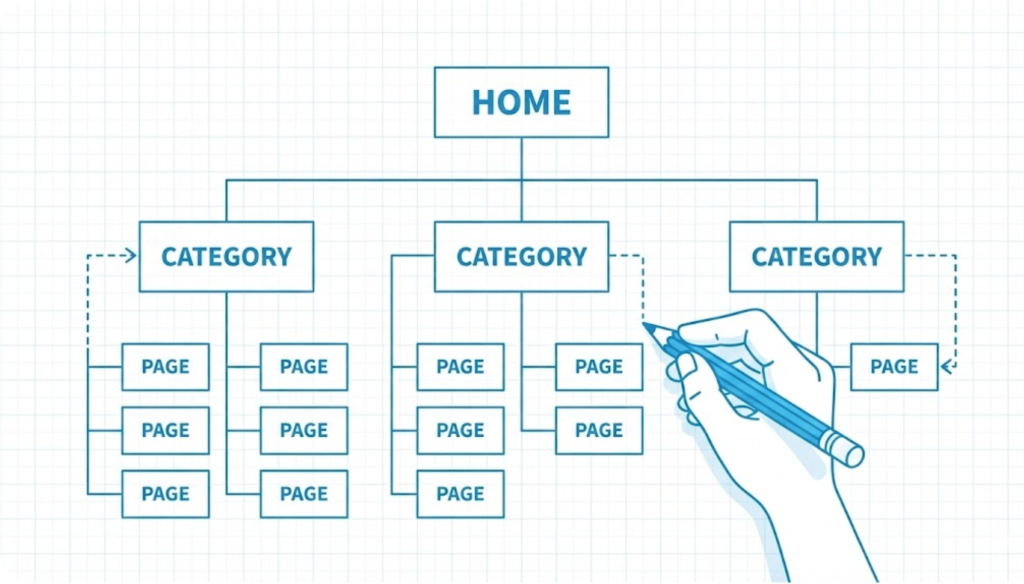
What is Information Architecture? (The Blueprint Before the Build)
Imagine building a house without a blueprint. You might buy the most expensive bricks and the best windows, but if you put the bathroom in the kitchen and the front door on the roof, the house is useless.
Websites are no different. You can have great content and fast servers, but if the structure is chaotic, users will leave, and Google will get lost.
Welcome to the decoder ring. Information Architecture (IA) is the science of organizing and labeling content on a website so that users and search engines can find what they need intuitively.
At Saint Digital, we do not design a single pixel until the IA is perfected. It is the skeleton that holds the entire SEO strategy together.
Is your site a maze?
A confusing structure kills rankings and conversions. Learn how to map out a site that Google loves in our comprehensive guide.
The SEO Connection: “Crawl Depth”
Many people think IA is just “User Experience” (UX). But it is a massive ranking factor.
Googlebot has a limited budget of time and energy, known as Crawl Budget. If your best content is buried six clicks deep inside a messy menu, Google might never find it. Or, if it does, it will assume the page is unimportant because it is so hard to reach.
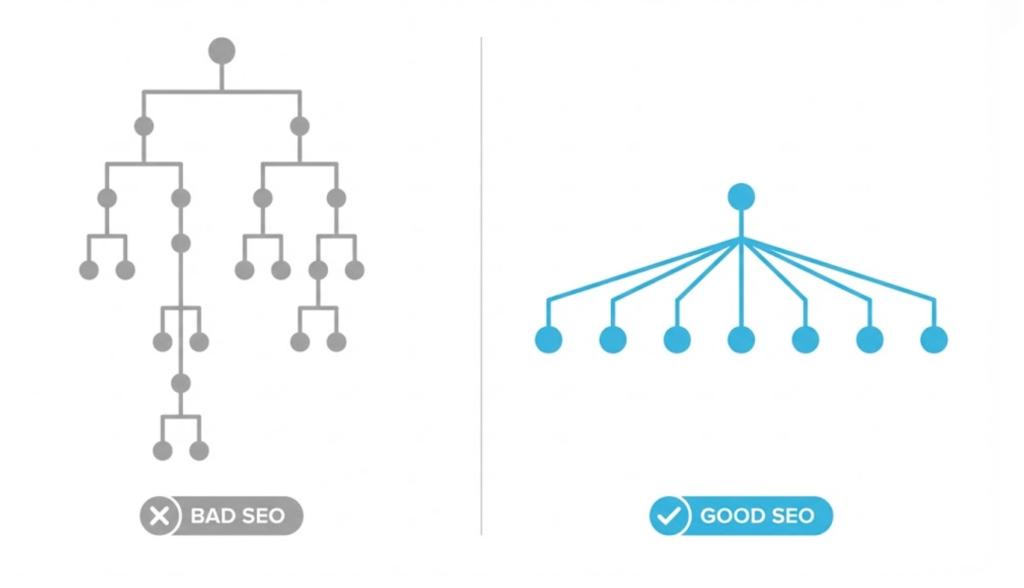
The Two Models: Flat vs. Deep
When we audit a site, we look at the shape of the architecture.
1. Deep Architecture (The “Tall” Site)
This is common in older sites. You click “Services,” then “Consulting,” then “UK,” then “North,” then “Leeds,” then “SEO.”
The Problem: This creates a “Click Depth” of 5 or 6. Every click away from the homepage dilutes the authority—or PageRank—of that page.
2. Flat Architecture (The “Wide” Site)
The Saint Digital Standard. We aim for a structure where every important page is within 3 clicks of the homepage.
This means broader menus, smarter Internal Links, and “Hub Pages” that act as gateways to specific topics. This spreads your homepage’s authority faster and ensures Google Indexes your deep content more often.
The Core Components of IA
IA isn’t just drawing boxes. It involves three specific systems:
- Organization Structures: How you group content (e.g., by Topic, by Audience, or by Date).
- Labeling Systems: What you call things. Do you say “About” or “Who We Are”? Do you say “Services” or “What We Do”? Consistency here is key for keyword targeting.
- Navigation Systems: How users move through the content (using Breadcrumbs, Mega Menus, and Sidebar Filters).
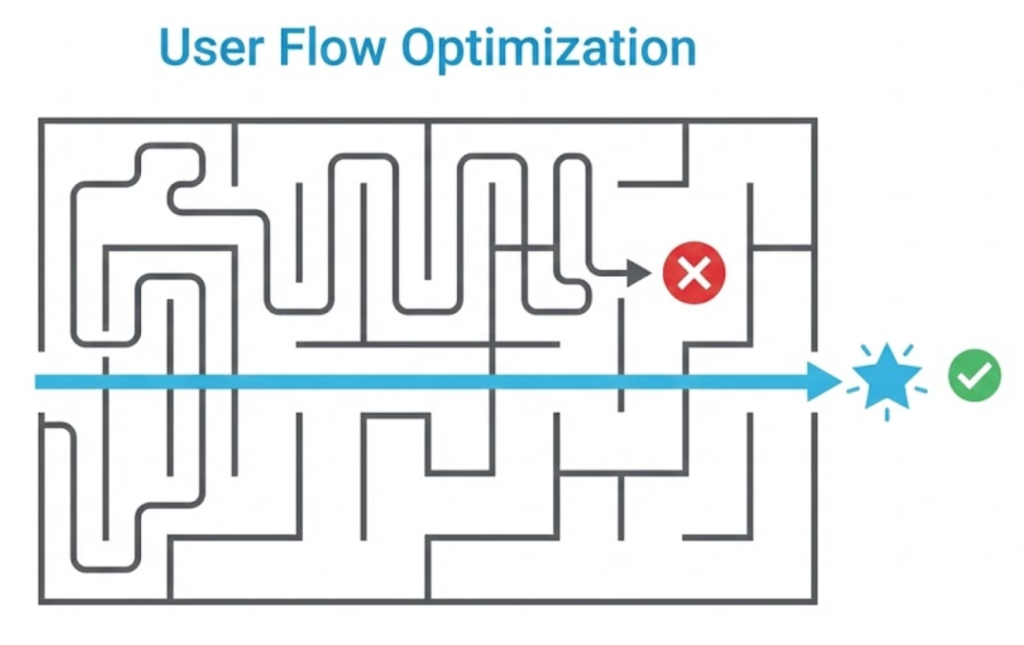
The “Orphan Page” Risk
Poor IA often leads to Orphan Pages—pages that exist on the server but have no internal links pointing to them. A good Information Architect ensures that every single page has a clear “parent” and logical “siblings.”
The Takeaway
Design makes a website look good. Information Architecture makes it work.
If your users are constantly using the search bar because they can’t find things in the menu, your IA is broken. And if users can’t find it, neither can Google.
At Saint Digital, we map the territory before we start the journey.
Ready to organize your chaos? Let’s draw the blueprint.
Are your visitors getting lost?
A pretty website is useless if no one can find what they are looking for. Confusing menus and hidden pages are killing your conversion rate.
At Saint Digital, we architect websites that guide users (and Google) exactly where they need to go.
Learn more from our Glossary
© Saint Digital Ltd, 2020-26, all rights reserved.