
A/B Testing
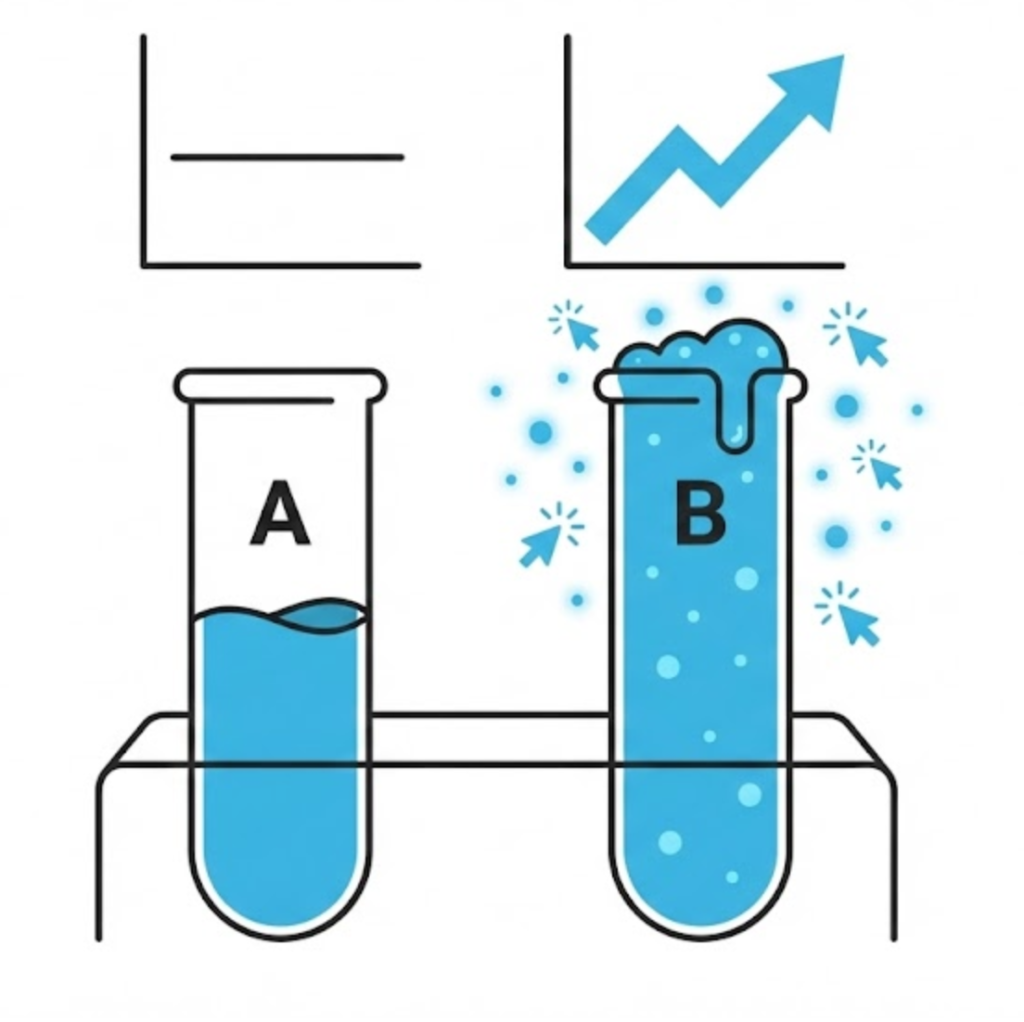
What is A/B Testing? (The “Pepsi Challenge” for Your Website)
You have a feeling that a red “Buy Now” button would work better than your current blue one. Your business partner disagrees; they think blue is more professional.
In the old days, you would argue about it. In 2025, you test it.
You show the blue button to 50% of your visitors. You show the red button to the other 50%. Then, you sit back and watch who clicks more.
This is A/B Testing (also known as Split Testing).
Welcome to the decoder ring. A/B Testing is the scientific process of comparing two versions of a webpage against each other to determine which one performs better. It eliminates guesswork and replaces it with hard data.
At Saint Digital, we don’t believe in “I think.” We believe in “I know.” We use A/B testing to turn subjective design choices into objective revenue wins.
Are you testing without traffic?
A/B testing is powerful, but it requires data to work. If your site isn’t generating enough organic visitors, your test results will never reach “statistical significance.” Build your volume first.
How A/B Testing Works (The Science)
It is exactly like a science experiment. You have a hypothesis, a control, and a variable.
The Control vs. The Variant
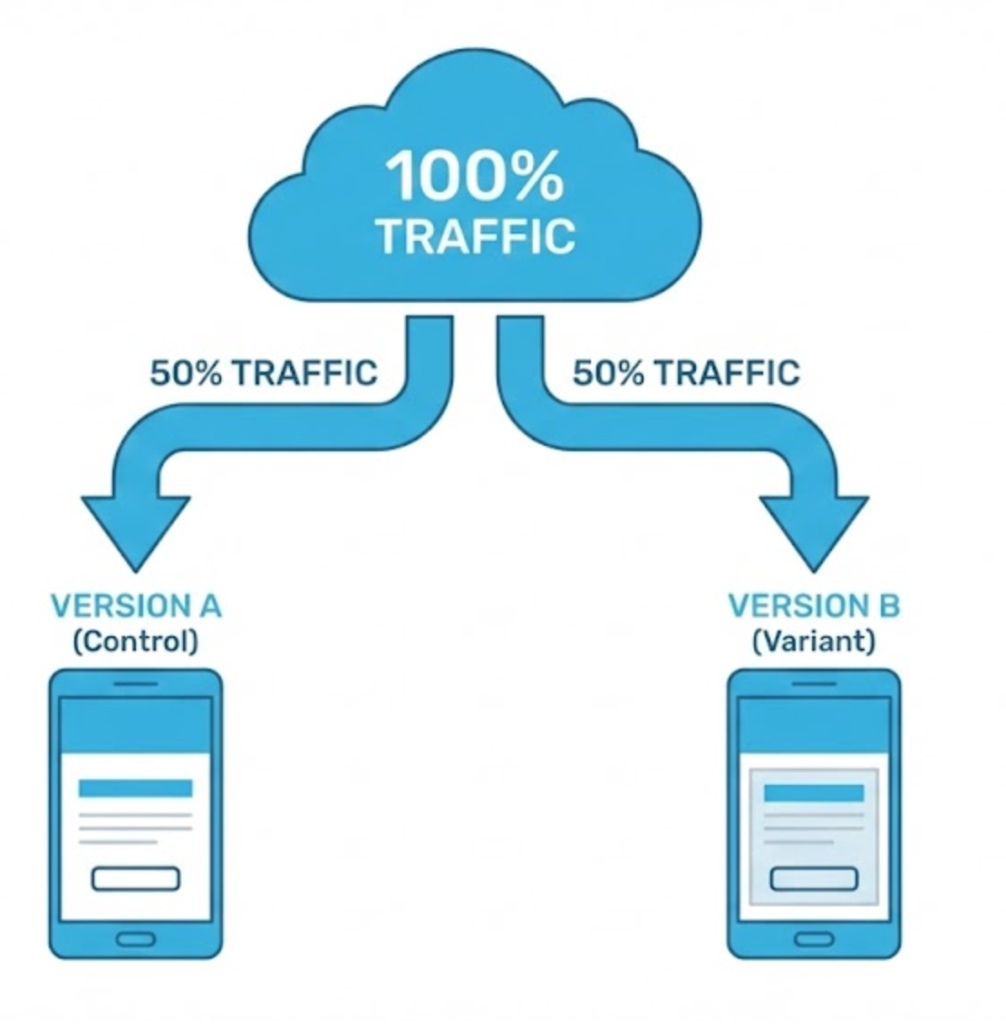
- The Control (Version A): This is your current webpage. It is the “champion.”
- The Variant (Version B): This is the modified version. It is the “challenger.” It might have a different headline, a different hero image, or a different layout.
Traffic is split randomly between them (50/50). We track the data using tools like Google Analytics to see which version generates more sales or leads.
Statistical Significance
You can’t just run a test for 10 minutes. If 5 people visit and 1 buys, that’s not a trend; it’s luck.
You need Statistical Significance. This means running the test until you have enough data (usually thousands of visits) to be 95% sure the result wasn’t a fluke. Stopping a test too early is the #1 mistake beginners make.
What Should You Test? (The Big Wins)
You can test anything, but you shouldn’t test everything. Changing a comma won’t make you rich. We focus on high-impact elements.
- Headlines: Testing a clear, benefit-driven headline against a clever one often yields the biggest wins.
- CTA Buttons: Does “Get Quote” beat “Submit”? (Spoiler: Action verbs usually win).
- Layout & Images: Does a photo of a smiling person build more trust than a photo of the product alone?
Technical Insight: Client-Side vs. Server-Side Testing
Not all tests are built the same way. There are two technical methods:
- Client-Side Testing: This uses JavaScript to “paint over” your existing website in the user’s browser. It is fast to set up, but can sometimes cause a “flicker” where the user sees the old version for a split second before the new one loads.
- Server-Side Testing: This happens on the server before the page is sent to the user. It is faster and flicker-free, but requires more developer work. At Saint Digital, we prefer Server-Side for complex tests to protect Core Web Vitals.
A/B Testing vs. Multivariate Testing
These sound similar, but they are different tools for different jobs.
- A/B Testing: You change one major thing (e.g., the Headline). You pit Page A against Page B. This is fast and requires less traffic.
- Multivariate Testing (MVT): You change multiple things at once (Headline AND Image AND Button Colour). The software tries every possible combination to find the perfect mix. This requires massive amounts of traffic to work.

The “Loser” is Still a Winner
What happens if you run a test and Version B loses? Did you waste your time?
No. Learning what doesn’t work is just as valuable as learning what does. If you test a long-form page against a short-form page, and the short one loses, you have learned that your audience prefers detail. That insight helps you build better pages forever.
The Takeaway
A/B Testing is the engine of Conversion Rate Optimization (CRO).
It moves you from “Designing for the Client” to “Designing for the Customer.” It stops arguments in the boardroom because the data never lies.
At Saint Digital, our web design services use continuous testing to refine your website. We hunt for the 1% improvements that stack up over time to double your revenue.
Are you guessing or testing? Let’s find the truth.
Stop leaving money on the table.
Your website could be performing twice as well with half the traffic. You just need to find the right formula. We at Saint Digital run rigorous A/B tests to unlock hidden revenue. We turn your website into a self-optimising machine.
Let’s start testing.
Learn more from our Glossary
© Saint Digital Ltd, 2020-26, all rights reserved.