
Anchor Text
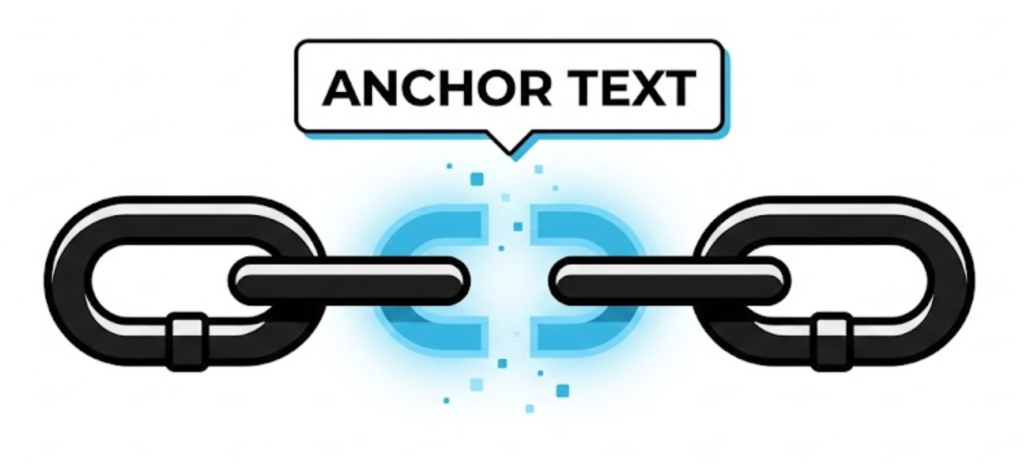
What is Anchor Text? (The Words That Tell Google Where to Go)
You use it every day. You click on it constantly. But do you know what it’s telling Google?
When you see a blue, underlined link on a webpage, the visible words you click on are called the Anchor Text.
It seems like a small detail. But in the eyes of a search engine, those few words are one of the most powerful signals you can send. They tell Google exactly what the destination page is about.
Welcome to the decoder ring. Anchor Text is the visible, clickable text in a hyperlink. At Saint Digital, we obsess over these words. Why? Because lazy anchor text (like “Read More”) is a wasted opportunity. Smart anchor text helps your pages rank higher.
Building a site structure that flows?
Internal linking is the backbone of a good SEO strategy. If you want to learn how to connect your pages so Google can find and rank them easily, start with the basics.
Why Anchor Text Matters for SEO
To Google, a link is a “vote.” But the anchor text is the reason for the vote.
Imagine you have a page about “Dog Training.”
- Scenario A: 100 websites link to it using the text “Click here.”
Google thinks: “This page is popular, but I don’t know what it’s about.” - Scenario B: 100 websites link to it using the text “Dog Training Tips.”
Google thinks: “This page is definitely about Dog Training Tips. I should rank it for that keyword.”
This is why Backlinks with relevant anchor text are so valuable. They provide context.
The “Click Here” Trap (SEO & Accessibility)
The most common mistake business owners make is using generic text like “Click here” or “Read more.” This is bad for two reasons:
1. It Wastes SEO Value
You are telling Google that the target page is about “Click here.” That is not a keyword you want to rank for. You are throwing away valuable relevance signals.
2. It Hurts Accessibility
Blind users use screen readers to browse the web. They often use a feature to “List all links” on a page. If they hear a list that says “Click here, Click here, Read more,” they have absolutely no idea where those links go. Descriptive links (e.g., “Read our full guide”) are accessible links.
The 5 Types of Anchor Text
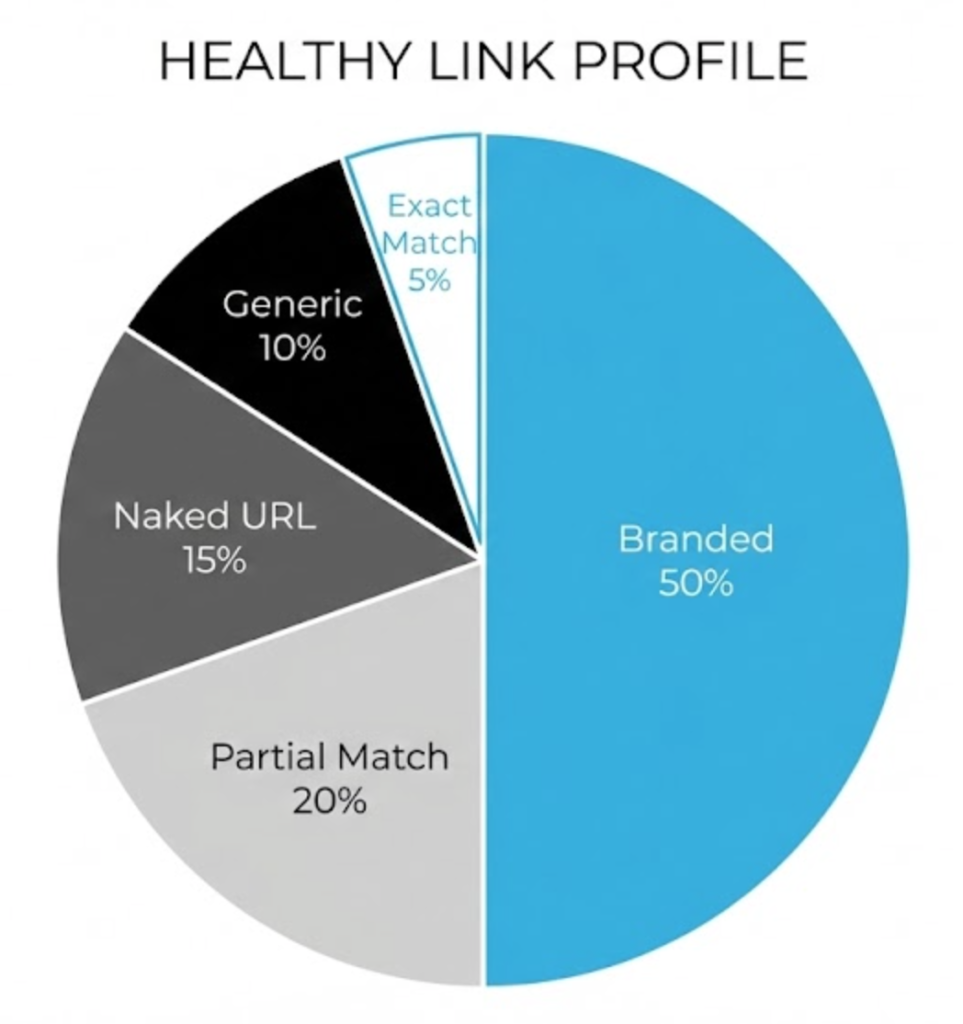
Not all anchors are the same. A healthy link profile uses a mix of these.
1. Exact Match
The anchor text is the exact keyword (e.g., linking to a web design page with “Web Design Leeds”).
SEO Value: Very High. Risk: High (if overused).
2. Partial Match
The anchor text contains the keyword but adds other words (e.g., “our web design agency in Leeds”).
SEO Value: High. Risk: Low (Looks natural).
3. Branded
The anchor text is your brand name (e.g., “Saint Digital”).
SEO Value: Medium (Trust building). Risk: Zero.
4. Naked URL
The anchor text is just the raw web address (e.g., “https://www.saint-digital.co.uk”).
SEO Value: Low. Risk: Zero.
5. Generic
The “Click Here” links we discussed.
SEO Value: Zero.
The “Over-Optimisation” Penalty (The Penguin)
In 2012, Google released the “Penguin” algorithm update. It was designed to punish sites that were gaming the system.
If 90% of your backlinks use the exact same keyword as the anchor text (e.g., “Best Cheap Insurance”), Google knows it’s unnatural. It looks like you paid for them. You will get a penalty.
The Saint Digital Strategy:
- For Internal Links: We are aggressive. We use Exact Match anchors because Google knows you control your own site structure.
- For Backlinks: We aim for variety. We want a natural mix of Brand names, naked URLs, and natural sentences.
Advanced Concept: Surrounding Text Context
Since the BERT update, Google has gotten smarter. It doesn’t just look at the anchor text; it looks at the sentence surrounding the link.
If you link with the word “here,” but the sentence says: “You can find more technical SEO audit tips here in this guide,” Google associates the bold words with the link. While specific anchor text is still better, context helps mitigate the damage of generic links.
Pro Tip: Image Links
Here is a detail most people miss: What happens when an image is a link?
In this specific case, Google uses the image’s Alt Tag as the Anchor Text. This is yet another reason why writing descriptive Alt Text is critical. If your image link has no Alt Text, it is the SEO equivalent of a “ghost link”—Google sees a connection but has no idea what it is for.
The Takeaway
Anchor Text is the signpost of the internet. It tells users what to expect before they click, and it tells Google how to file your content.
At Saint Digital, our SEO services don’t leave these words to chance. Whether we are building internal links in a blog post or earning PR links from the press, we ensure the anchor text is descriptive, relevant, and varied.
Are your links working hard enough? Let’s check.
Make every link count
Your internal linking structure is the nervous system of your website. If you use weak, generic anchor text, you are blocking the flow of information. We at Saint Digital build strategic linking structures that pass authority to your most important pages.
Let’s connect your content.
Learn more from our Glossary
© Saint Digital Ltd, 2020-26, all rights reserved.