
BERT
What is BERT? (Why Google Finally Understands Prepositions)
If you have ever felt like you had to write “robot-speak” to get Google’s attention—stuffing awkward phrases into sentences where they don’t belong—we have good news: BERT changed the rules.
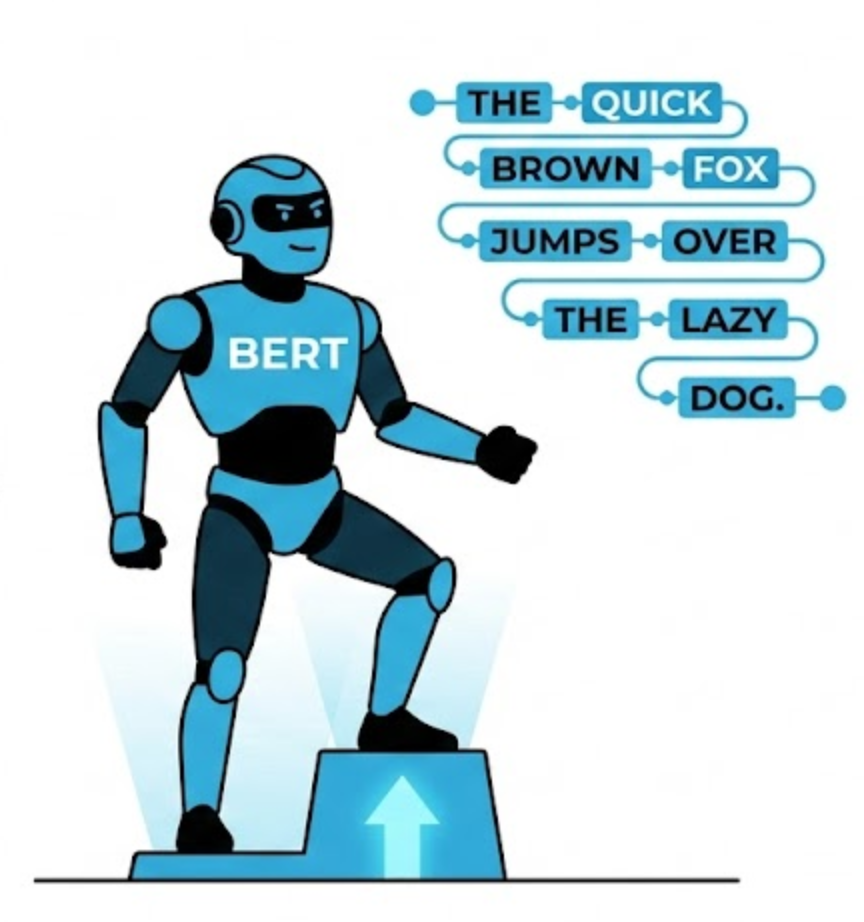
BERT (which stands for Bidirectional Encoder Representations from Transformers) was rolled out by Google in 2019. It represented the biggest leap in search technology in a decade. Before BERT, Google was like a tourist with a phrasebook. After BERT, Google became a fluent speaker, understanding nuance, context, and prepositions.
For website owners, BERT marked the official death of “Keyword Stuffing” and the rise of Natural Language Processing (NLP).
Is your writing stuck in 2010?
Writing for robots doesn’t work anymore. Modern SEO is about creating helpful, human-first content. Learn the shift from “Keywords” to “Intent” in our guide.
The “Pre-BERT” Era: Why Search Used to Be Clunky
To appreciate BERT, you have to look at how search used to work. Historically, Google analyzed text based on order and keywords.
If you searched for “Can you get medicine for someone pharmacy,” old Google would scan for “medicine” and “pharmacy.” It might miss the word “for” or “someone,” showing you a general page about a pharmacy rather than the specific answer about picking up a prescription for a friend.
How BERT Works: The “Bi-Directional” Secret
The magic of BERT is in the name: Bidirectional.
Previous models read text in one direction (left-to-right). They would try to predict the meaning linearly.
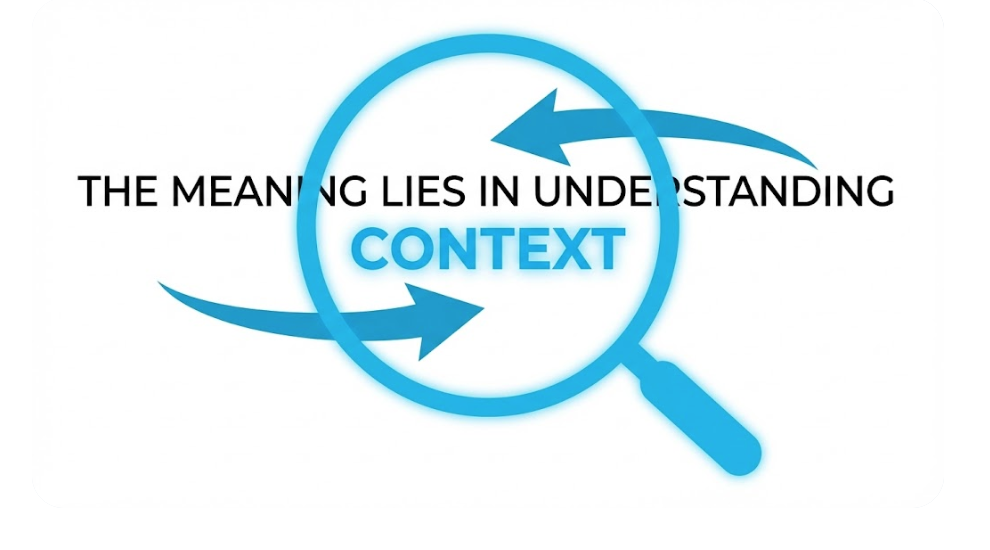
BERT is non-linear. It reads the entire sentence at once. It looks at the words that come before a keyword AND the words that come after it simultaneously. This allows it to understand context.
The Famous “Bank” Example
In the world of SEO, the word “Bank” is the classic example of ambiguity.
- Sentence A: “I parked by the bank of the river.”
- Sentence B: “I parked by the bank to get cash.”
To a human, the difference is obvious. BERT looks at “river” and “cash” at the same time it looks at “bank,” instantly understanding that one is a landform and the other is financial.
Why Prepositions Matter (To, For, At)
BERT’s biggest impact was on “function words”—the small connecting words like to, for, in, and at.
Example: “Math practice books for adults.”
- Pre-BERT: Google might ignore “for” and match “Math practice books” and “adults.” It might show a child’s book reviewed by an adult.
- Post-BERT: It understands that “for” indicates the audience. It knows you want a book written for an adult learner.
BERT vs. RankBrain vs. MUM
Google’s algorithm is a stack of different technologies.
- RankBrain (2015): Focuses on interpreting new queries by guessing intent.
- BERT (2019): Focuses on Context within a sentence.
- MUM (2021): Focuses on Knowledge. It connects complex topics across languages and media.
Optimizing for BERT: The “Anti-Optimization” Strategy
The irony is that you optimize for BERT by stopping your over-optimization. BERT is trained on natural human dialogue.
1. Write for “Long-Tail” Intent
BERT shines on long, conversational queries (Long-Tail Keywords). Target specific questions: “How to hire an SEO agency for a manufacturing business.”
2. Use Natural Syntax
Stop forcing keywords into headers where they don’t fit. Use clear, simple sentences. If you wouldn’t say it in a client meeting, don’t write it on your website.
BERT and Featured Snippets
Because BERT can understand specific passages within a long page, Google doesn’t need your whole page to be about one topic to rank you. It can now find a specific paragraph deep inside your guide that answers a user’s question perfectly and elevate it to a Featured Snippet.
The Takeaway
BERT was the update that made Google “human.” It shifted the power away from technical SEOs who manipulated keyword density, and gave it to content creators who understand their audience.
The lesson of BERT is simple: Clarity wins. Context wins. Natural language wins.
At Saint Digital, our SEO services craft strategies that align with modern Natural Language Processing.
Ready to get your website speaking Google’s language?
Make your website instant.
A beautiful website is nice, but a beautiful website that converts is a business-changer. We at Saint Digital obsess over the psychology of the click. We design every button and every link to guide your user to their “next step.”
Ready to turn your website clicks into clients? Let’s have a chat.
Learn more from our Glossary
© Saint Digital Ltd, 2020-26, all rights reserved.