
Freshness Algorithm

In the high-stakes world of search engine optimization, relevance is the currency of success. However, relevance is not a static concept. Imagine searching for “current stock market trends” and being presented with a detailed, well-written analysis from 2019. The information might be authoritative, grammatically perfect, and factually correct for its time, but for your current needs, it is completely useless. You need the information now, reflecting the reality of today’s market.
This scenario highlights a critical challenge for search engines: balancing historical authority with urgent relevance. The mechanism Google uses to solve this problem is widely known in the digital marketing industry as the “Freshness Algorithm.”
While often discussed by webmasters as a single, monolithic update, “freshness” is actually a complex, ongoing component of modern ranking signals. It is not a universal directive that “newer is always better.” Rather, it is a sophisticated method of determining when the age of content impacts its quality and utility to the user.
For SEO professionals, content creators, and website owners, understanding the nuances of freshness is no longer optional. It is essential for maintaining visibility in an increasingly real-time digital landscape where user intent shifts by the minute.
What Is the Freshness Algorithm?
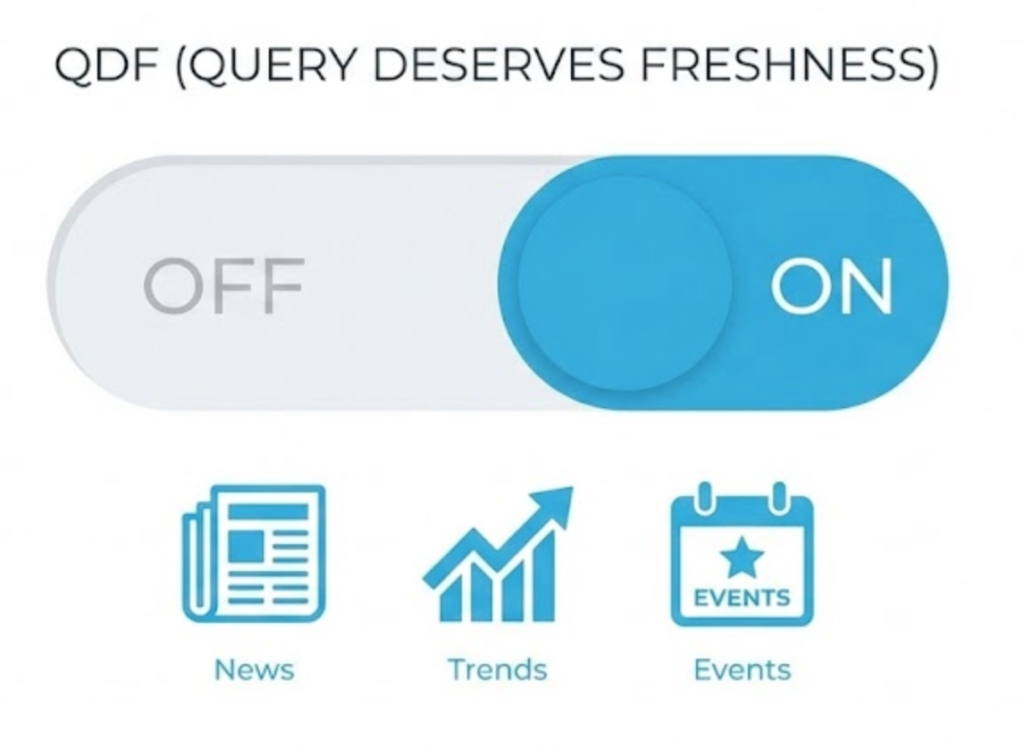
At its core, the concept of freshness in search is based on the understanding that some information decays faster than other information. Google formalized this approach significantly around 2007 with a patent that introduced the concept of “Query Deserves Freshness” (QDF). This mathematical model allowed the search engine to identify when a user’s search query related to a trending topic or current event.
Later, a major algorithm update in 2011 specifically targeted fresher results for a wider range of queries, impacting roughly 35% of searches at the time. Today, these concepts are not just updates; they are baked into the core ranking infrastructure, working in tandem with the “Caffeine” indexing system which allows Google to crawl and index content almost moments after it is published.
The Freshness Algorithm is not a penalty system designed to punish older content. Instead, it is a re-ranking signal that boosts more recent content for specific searches where users clearly want the latest information.
The Library Analogy: Think of a search engine like a massive public library. For a query like “the history of the Roman Empire,” the librarian directs you to the history section. The best book might have been written twenty years ago; its age doesn’t diminish its value because the facts haven’t changed. However, if you ask for “yesterday’s election results,” directing you to the history section is unhelpful. The librarian instead directs you to today’s newspaper stand.
The Freshness Algorithm is the system that helps the librarian decide when to send you to the bookshelves and when to send you to the newsstand.
Master Your Site’s Ranking Potential
Understanding algorithms is just the first step. To truly capitalize on freshness, your site architecture must allow search bots to crawl and index changes rapidly. Download our complete guide to technical optimization to ensure your foundation is solid.
The Crucial Distinction: When Does Freshness Matter?
The most important thing to understand about freshness is that it is highly dependent on the search query. Google does not apply freshness signals equally to all searches. If it did, the internet would become a chaotic stream of low-quality, albeit brand-new, content overriding established knowledge.
Search engines categorize queries based on user intent. Freshness signals are heavily weighted for specific categories, while virtually ignored for others.
1. Recent Events and Breaking News
This is the most obvious category. When a major event occurs—a natural disaster, a political election, a celebrity scandal, or a sports championship—user interest spikes immensely and immediately. In these moments, minutes matter. Search engines must prioritize content published moments ago over content published yesterday.
2. Regularly Recurring Events
These are events that happen on a predictable schedule but require updated data each time. Examples include “NFL scores,” “Oscar winners,” “electoral map,” or “fiscal year tax brackets.” Users searching for these terms almost always want the most recent iteration of the event, not historical data from four years ago. The algorithm understands that “Oscar winners” usually implies “current year.”
3. “Hot” Topics and Trends
These are subjects that aren’t necessarily “news” in the traditional sense, but are currently capturing public attention. This could be a viral TikTok trend, a new diet fad, or discussions revolving around a newly released piece of technology. The algorithm detects a sudden surge in search volume for a specific topic and adjusts to favor recent articles, reviews, or discussions about it.
4. Information That Expires
Some informational queries have an implied expiration date. A search for “best SEO tools” requires current information because software features change, pricing updates, and new tools enter the market. A “best of” list from 2018 is practically obsolete today. Similarly, queries related to tax laws, medical guidelines, or travel restrictions require the newest available information to be safe and accurate.
The Contrast: Evergreen Content
Conversely, freshness signals are minimal for “evergreen content“. Queries like “how to boil an egg,” “what is the Pythagorean theorem,” or “tips for writing a novel” do not require up-to-the-minute updates. For these, Google prioritizes depth, authority, and comprehensive coverage over the publication date. In fact, for evergreen queries, an older page that has accumulated years of backlinks and user engagement signals will often outrank a brand new page.
How Google Determines “Freshness” (The Signals)
It is a common misconception that Google simply reads the “date published” stamp on a blog post and ranks the newest one highest. If it were that easy, spammers would just update the dates on their old articles every morning to game the system. Search engines use a sophisticated array of signals to determine if content is genuinely fresh and relevant.
1. The Magnitude of Content Updates
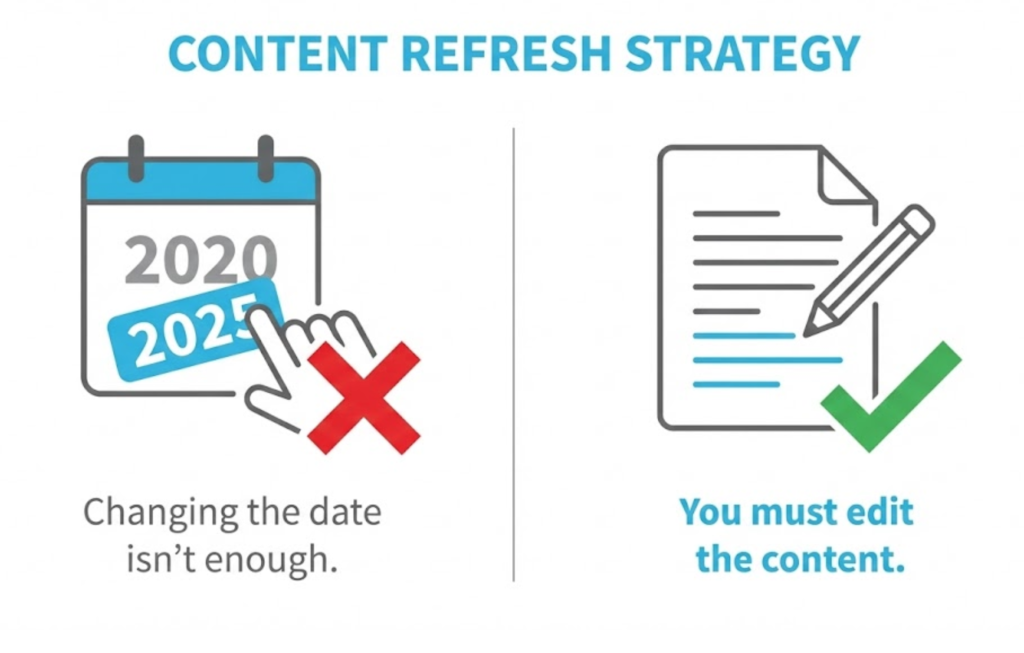
Google can differentiate between a cosmetic update and a substantive one. Changing a single sentence, fixing a typo, or merely updating the timestamp in the CMS does not constitute a “fresh” piece of content. For an older URL to regain “freshness,” a significant portion of the main content needs to change. This could involve adding new paragraphs to reflect recent developments, updating statistical data, adding new examples, or rewriting outdated sections. Google is looking for information gain, not just a changed date.
2. Frequency of Page Updates
Some pages are expected to change frequently. A stock ticker page, a live blogging page during an event, or a weather forecast page needs constantly changing content. Search engines monitor how often a specific URL is updated and will crawl highly dynamic pages more frequently to capture those changes.
3. New Page Creation (Site-Wide Freshness)
While individual page freshness matters, the overall activity level of a domain also plays a role. A website that hasn’t published a single new article in two years may be viewed differently than a competitor site that publishes high-quality news daily. For news and media publishers, the velocity of new content creation is a vital signal of their relevance in the current information landscape.
4. Trend Scoring and Search Volume Spikes
This is the “QDF” element in action. Google monitors real-time search behavior. If search volume for “Hurricane Milton” suddenly skyrockets from zero to millions in an hour, the algorithm instantly recognizes this as a topic demanding freshness. It then alters the ranking criteria for that specific query to favor news reports and live updates over static encyclopedia entries.
5. Link and Engagement Velocity
How the web reacts to content is also a freshness signal. If an older article suddenly starts receiving a massive influx of new backlinks from news organizations, social media platforms, and forums, it signals to Google that the older content has suddenly become relevant again due to current events. Similarly, a sudden spike in traffic and engagement on a specific page can signal current relevance.
The Nuance: Balancing Freshness, Authority, and Relevance
It is vital to remember that freshness is just one ingredient in the ranking recipe. It rarely overrides the foundational pillars of SEO: Relevance and Authority (often summarized by E-E-A-T: Experience, Expertise, Authoritativeness, and Trustworthiness).
Even for a breaking news query, Google will not rank a brand-new, spammy blog post with zero authority above a slightly older article from a major reputable news outlet. Trustworthiness is paramount, especially in an era of misinformation. The algorithm is constantly performing a balancing act. It asks: “Is it better to show the user a highly authoritative article from yesterday, or a lower-quality article from five minutes ago?” The answer depends on the nature of the query and the velocity of the news cycle surrounding it.
Don’t Let Your Content Decay
Freshness isn’t just about writing news; it’s about maintaining your existing assets. Learn how to perform a comprehensive content audit and refresh strategy in our dedicated guide.
Actionable Strategies for Content Creators
Understanding the Freshness Algorithm allows site owners to better serve their audience and improve their rankings. Here is how to adapt your strategy to leverage these signals:
1. Audit Your Content for “Decay”
Regularly review your top-performing articles. Are they based on data that expires? Do they reference tools that no longer exist or years that have passed? Identify content that should be evergreen but has become outdated due to changing facts. This process, often called “Content Pruning” or “Content Refreshing,” is one of the highest ROI activities in SEO.
2. Perform Meaningful Updates
When you update an old post, make it count. Don’t just change the year in the title tag from “2025” to “2026.” Go through the content and ensure every piece of advice, every statistic, and every screenshot is accurate for the current date. Add a “Last Updated” note at the top of the content so both users and search bots understand the timeline.
3. Leverage Structured Data
Use schema markup to clearly indicate dates to search engines. Properties like datePublished and dateModified help Google accurately understand the timeline of your content. Ensure these dates reflect reality; abusing them can lead to manual actions.
4. Distinguish News from Evergreen
If you run a business site, keep your evergreen educational content separate from news announcements. Use a blog or a “News” section for timely updates, industry commentary, and trend analysis. This tells Google that parts of your site are dedicated to freshness, while other parts serve as long-term resources.
5. Utilize XML Sitemaps for Rapid Indexing
Ensure your XML sitemap is dynamically updated. When you publish a new post or significantly update an old one, the sitemap should reflect the new <lastmod> date. This encourages Googlebot to re-crawl the page sooner, ensuring your “freshness” is actually registered in the index.
Conclusion: The Dynamic Web
The “Freshness Algorithm” is not a static rule, but a reflection of the internet’s dynamic nature. It is search engines’ attempt to mirror human preferences for timeliness when it matters most. By understanding that freshness is query-dependent and relies on genuine content updates rather than simple timestamp manipulation, digital marketers can build strategies that stand the test of time.
The goal is not just to be new; the goal is to be relevant today, tomorrow, and whenever a user needs your information. Whether you are covering breaking news or maintaining a library of evergreen guides, respect the user’s need for accuracy, and the ranking algorithms will follow.