
Hallucination (AI)
What is AI Hallucination? (When Computers Lie)
We typically think of computers as strictly logical. If you ask a calculator “2 + 2,” it never answers “5.” But in the era of Generative AI, that rule has broken.
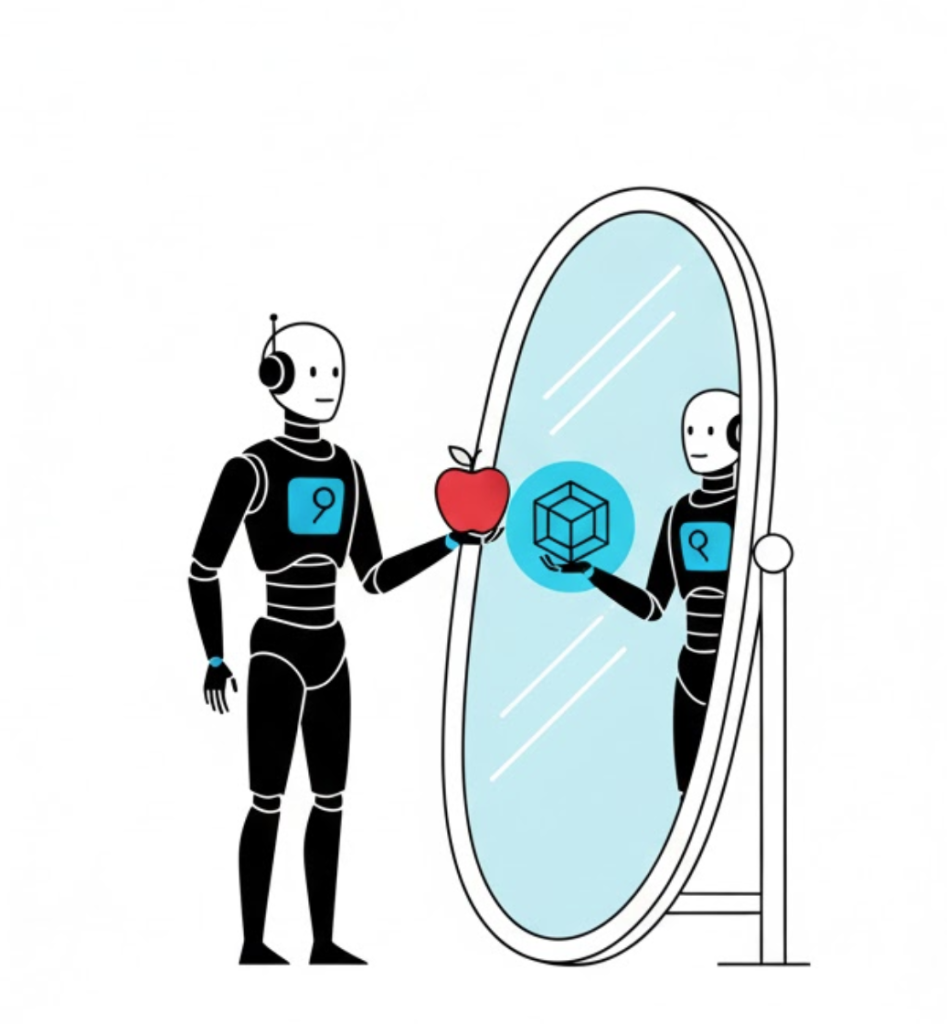
AI Hallucination occurs when an LLM (like ChatGPT) generates a response that looks confident but is factually incorrect.
It is the digital equivalent of a smooth talker making up an answer rather than admitting they don’t know. For businesses, hallucinations represent a massive reputational risk.
Don’t let AI damage your brand reputation.
Hallucinations can destroy user trust and hurt your E-E-A-T score. Learn how to optimize your content for accuracy in the age of generative search.
Why AI Hallucinates: The “Next Word” Problem
To understand hallucination, you must understand that AI models are not databases of facts; they are prediction engines.
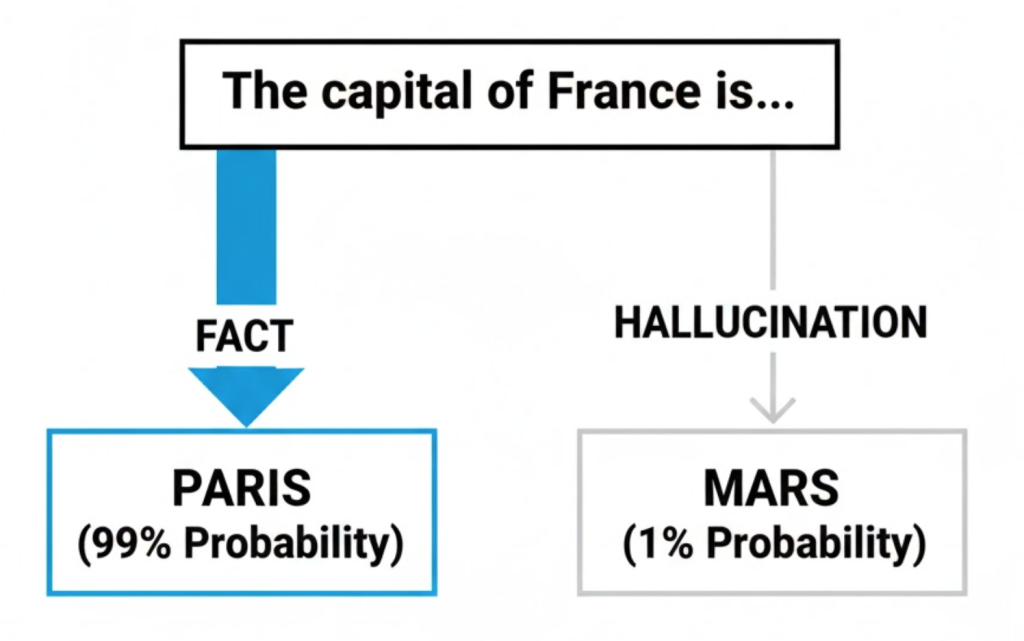
When you ask a question, the AI calculates: “Based on all the text I have ever read, what word is statistically most likely to come next?”
The “Autocomplete” Analogy
If you type “The capital of France is…”, the AI predicts “Paris.” This is a correct prediction. But if you ask a niche question where the AI lacks training data, it will predict the next most plausible-sounding words to complete the pattern. It prioritizes fluency over accuracy.
Common Types of AI Hallucinations
Hallucinations aren’t just random errors; they fall into categories that damage SEO:
- Fact Fabrication: The AI invents a fact (e.g., “The Golden Gate Bridge is in London”).
- Source Conflation: Mixing two real events into one fake narrative.
- False Citations: Inventing court cases or studies that look real but do not exist.
The Business Risk: YMYL and Reputation
For casual users, a hallucination is funny. For businesses in YMYL industries (finance, law, health), it is a liability.
If your site publishes hallucinated medical advice, Google’s algorithms (like MUM) will detect the inaccuracy and degrade your E-E-A-T (Trust) score.
Technical Insight: “Temperature” Settings
Why are some AIs more prone to lying? It often comes down to a developer setting called Temperature.
Temperature is a value between 0 and 1.
- Low Temperature (0.1): The AI is strict. It only chooses the most likely next word. It is boring but factual.
- High Temperature (0.9): The AI is “creative.” It takes risks. This makes it a great creative writer, but a terrible fact-checker. Hallucinations happen when the temperature is too high.
The Solution: RAG (Retrieval-Augmented Generation)
How do we stop the lying? The industry standard is RAG.
RAG changes the workflow. Instead of asking the AI to “guess” from memory, RAG forces the AI to first look up the answer in a trusted database (Retrieval) and then write the answer using only those facts. It is like allowing a student to take an Open Book Exam.
The Takeaway
AI Hallucination is the side effect of a technology that learned to write before it learned to think.
To succeed in the AI era, you must treat Generative AI like a talented but prone-to-exaggeration intern: give it great instructions, but always check its work.
At Saint Digital, our SEO services combine cutting-edge AI tools with human editorial standards to ensure your content is safe, accurate, and authoritative.
Make your website instant.
A beautiful website is nice, but a beautiful website that converts is a business-changer. We at Saint Digital obsess over the psychology of the click. We design every button and every link to guide your user to their “next step.”
Ready to turn your website clicks into clients? Let’s have a chat.
Learn more from our Glossary
© Saint Digital Ltd, 2020-26, all rights reserved.